How to Increase Akkermansia Muciniphila — Diet, Supplements and Lifestyle

Akkermansia muciniphila cannot be eaten directly. It is not in yogurt, kefir, kimchi or any other fermented food. But its levels in the gut are not fixed — they respond predictably to what you eat, how you live, and what supplements you take. This guide covers the strategies with the strongest published evidence for increasing Akkermansia levels, ranked by the quality of supporting research.
Have a question about Akkermansia?
Our assistant can answer questions about what Akkermansia is, how to raise your levels, what the research shows, and which supplements and products are available in the UK.
If you want to start today, the highest-evidence combination available at most UK supermarkets is: a small glass of 100% pomegranate juice with two or three cups of green tea daily, alongside a chicory-root or inulin prebiotic supplement. This combination addresses both direct Akkermansia stimulation (polyphenols) and mucin substrate support (prebiotic fibre) — the two primary mechanisms for raising Akkermansia through diet.
How Akkermansia Levels Are Increased — The Two Routes
To understand how to increase Akkermansia, it helps to understand the two distinct routes through which its abundance can be raised:
- Direct stimulation — certain compounds directly stimulate Akkermansia growth, either by acting as substrates it can metabolise or by creating chemical conditions that favour its proliferation. Polyphenols (pomegranate, cranberry, green tea) and berberine work primarily through this route.
- Environmental support — increasing mucin availability (through prebiotic fibres that stimulate goblet cells) creates more of Akkermansia's primary food source; fasting increases Akkermansia by reducing competition from dietary fermentation; and reducing factors that kill it (antibiotics, emulsifiers) allows it to recover naturally.
The most effective strategies typically work through both routes simultaneously.
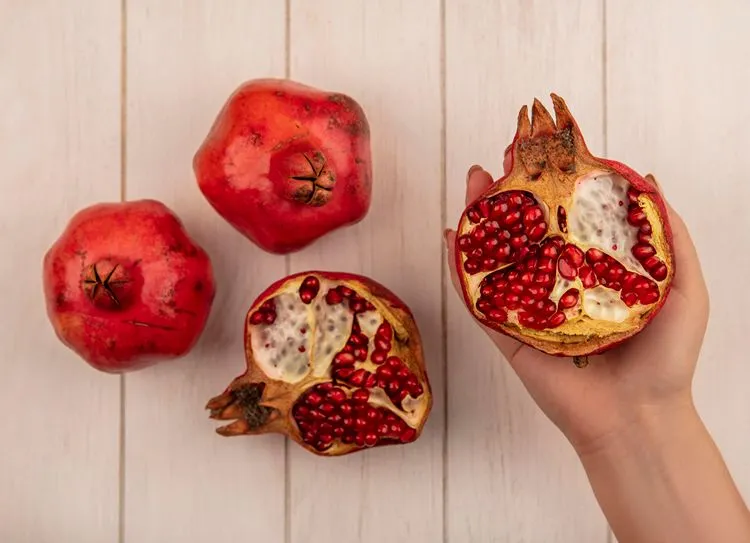
Strategy 1 — Pomegranate (Strongest Dietary Evidence)
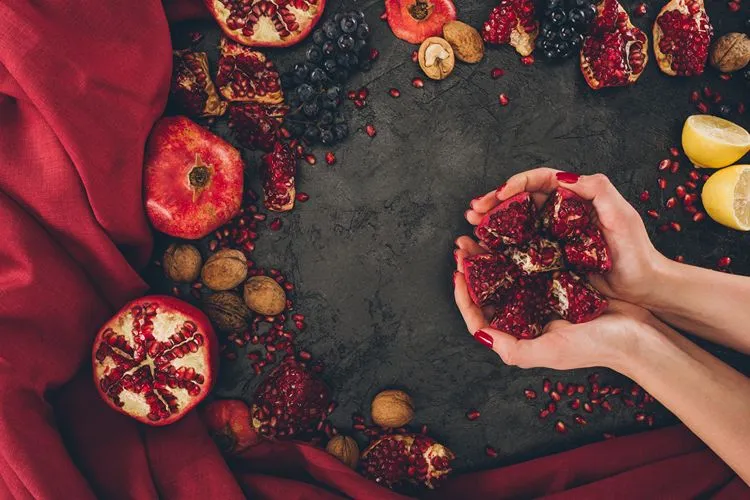
Pomegranate is the single food with the strongest published evidence for increasing Akkermansia muciniphila. Multiple studies in animals and humans have shown that pomegranate polyphenols — particularly ellagitannins (punicalagins, punicalin) and anthocyanins — significantly increase Akkermansia abundance.
The mechanism is two-fold. Pomegranate polyphenols are partially metabolised in the colon into urolithins — metabolites that directly stimulate Akkermansia growth and also have independent gut barrier-strengthening effects. Additionally, ellagitannins stimulate mucin secretion from goblet cells, increasing the mucin substrate that Akkermansia feeds on.
Practical options available in the UK:
- Whole pomegranate — seeds and arils consumed directly; highest fibre and polyphenol content
- 100% pomegranate juice — widely available in UK supermarkets; choose varieties with no added sugar or other juice dilution
- Pomegranate extract supplements — standardised for punicalagin content; available online and in health stores
Strategy 2 — Cranberry
Cranberry has specific polyphenol compounds — A-type proanthocyanidins (PACs) — that are structurally distinct from the B-type PACs found in most other berries. These A-type PACs have been shown in multiple studies to increase Akkermansia abundance, as well as having independent anti-adhesion effects on pathogenic bacteria.
Research comparing dried cranberries, unsweetened cranberry juice and cranberry extract all show similar effects on Akkermansia, though dried cranberries provide additional fibre. Standard cranberry juice cocktails (with added sugar) are less beneficial — the sugar content counteracts some of the microbiome benefits.
Strategy 3 — Berberine (Strongest Supplement Evidence)
Berberine is a plant-derived alkaloid found in goldenseal, barberry, and other plants. It has been used in traditional Chinese medicine for centuries and has a substantial modern clinical evidence base — including for type 2 diabetes management, where it produces effects comparable to metformin in some studies.
Berberine is one of the few non-Akkermansia supplements with strong clinical evidence for significantly increasing Akkermansia muciniphila levels. The 2015 study by Zhang et al. in the Journal of Clinical Endocrinology and Metabolism showed that berberine supplementation in type 2 diabetes patients increased Akkermansia abundance alongside improvements in metabolic markers. The mechanism is not fully established but appears to involve berberine's antimicrobial effects selectively favouring Akkermansia relative to competing bacteria, and its effects on mucin secretion.
Berberine interacts with several medications including blood thinners, diabetes medications (risk of hypoglycaemia when combined), and some antibiotics. It is not recommended during pregnancy. Always consult your GP before taking berberine if you are on any medication or have a diagnosed health condition.
Strategy 4 — Green Tea and EGCG
Green tea catechins — particularly epigallocatechin gallate (EGCG) — have been shown in multiple studies to increase Akkermansia muciniphila abundance. EGCG is a potent polyphenol with documented effects on gut microbiome composition, and green tea consumption is one of the most practical and accessible ways to consume it regularly.
Brewed green tea contains substantially more EGCG than bottled green tea products, which often contain very little. Two to three cups of freshly brewed green tea daily provides meaningful EGCG intake. Matcha — powdered whole green tea leaf — contains considerably higher catechin concentrations than brewed tea and is worth considering for those specifically targeting Akkermansia.
Strategy 5 — Prebiotic Fibres
Prebiotic fibres — inulin, fructooligosaccharides (FOS), and resistant starch — do not directly increase Akkermansia in the same way polyphenols do, but they support it by stimulating mucin production. As mucin is Akkermansia's primary food source, increasing mucin availability creates a more favourable environment for it.
Inulin in particular has been specifically studied in relation to Akkermansia. The best dietary sources include:
| Prebiotic Food | Prebiotic Type | UK Availability |
|---|---|---|
| Chicory root | Inulin (highest concentration of any food) | Supplement form widely available; chicory coffee available in health stores |
| Jerusalem artichoke | Inulin | Seasonal in UK supermarkets and farmers markets |
| Garlic | Inulin and FOS | Year-round in all supermarkets |
| Onion (raw) | FOS | Year-round; cooking reduces prebiotic content significantly |
| Leek | Inulin and FOS | Year-round in UK supermarkets |
| Oats | Beta-glucan; some FOS | Year-round; widely consumed in the UK |
| Cooked and cooled potatoes | Resistant starch | Year-round; potato salad, cold cooked potatoes |
| Unripe banana | Resistant starch | Year-round; greener bananas have higher resistant starch |
Strategy 6 — Intermittent Fasting
Intermittent fasting — particularly the 16:8 protocol (16 hours fasting, 8-hour eating window) — consistently increases Akkermansia relative abundance. The mechanism is well understood: during fasting periods, when dietary carbohydrates are unavailable for fermentation, Akkermansia's mucin food source becomes relatively more important. With less competition from dietary fermentation, Akkermansia increases in relative abundance.
A 2019 study examining gut microbiome changes during Ramadan fasting in healthy adults found significant increases in Akkermansia alongside improvements in gut barrier markers. This is consistent with animal data showing that calorie restriction reliably increases Akkermansia. The practical implication is that time-restricted eating — even without calorie restriction — is likely to support Akkermansia levels.
Strategy 7 — Exercise
Physical activity has emerging evidence for positive effects on Akkermansia abundance. A 2018 study found that professional rugby players had significantly higher Akkermansia levels than sedentary controls of similar BMI — though the dietary differences in this study make it difficult to attribute the effect to exercise alone. Animal studies show that exercise increases Akkermansia through mechanisms that include increased intestinal motility, altered bile acid profiles, and direct effects on mucin production.
Regular aerobic exercise at moderate intensity appears to be the most consistently beneficial pattern for overall gut microbiome health including Akkermansia. The effect is likely additive with dietary changes rather than independent.
What to Avoid — Factors That Deplete Akkermansia
Raising Akkermansia is only half the strategy — avoiding what depletes it is equally important. The key depletors are:
- Antibiotics — one course can reduce Akkermansia levels for months; use only when necessary and support recovery with diet
- Food emulsifiers — carboxymethylcellulose and polysorbate-80 in ultra-processed foods directly degrade the mucus layer Akkermansia inhabits
- High sugar intake — disrupts overall microbiome diversity and creates conditions unfavourable for Akkermansia
- Artificial sweeteners — emerging evidence that saccharin, sucralose and aspartame alter gut microbiome composition unfavourably
- Chronic stress — cortisol and stress hormones measurably reduce Akkermansia levels through gut-brain axis signalling
- Excessive alcohol — directly disrupts gut barrier function and microbiome composition
Summary — Ranked by Evidence Strength
| Strategy | Evidence Level | Time to Effect |
|---|---|---|
| Akkermansia supplement (pasteurised) | Strong — human RCT | 4–12 weeks |
| Pomegranate / pomegranate juice | Strong — human and animal studies | 4–8 weeks |
| Berberine supplement | Strong — human clinical studies | 4–8 weeks |
| Cranberry (dried or unsweetened juice) | Moderate — human and animal studies | 4–8 weeks |
| Green tea / matcha (daily) | Moderate — animal and observational human | 4–8 weeks |
| Intermittent fasting (16:8) | Moderate — human observational, animal mechanistic | 2–4 weeks |
| Prebiotic fibres (inulin, FOS) | Moderate — supporting mechanism evidence | 4–8 weeks |
| Regular aerobic exercise | Emerging — observational human, animal studies | 8–12 weeks |
| Reducing ultra-processed foods | Moderate — mechanistic evidence for emulsifier harm | Variable |
Frequently Asked Questions
Most dietary and supplement interventions show measurable changes in Akkermansia levels within 4–8 weeks. The Depommier 2019 clinical trial used a three-month supplementation period. Intermittent fasting may produce effects more quickly — within 2–4 weeks. Sustainable increases through diet are likely to require ongoing dietary habits rather than short-term interventions.
Yes. Pomegranate, cranberry, green tea, prebiotic-rich foods and intermittent fasting all have evidence for increasing Akkermansia without supplementation. For many people, dietary changes may produce sufficient improvement in Akkermansia levels and associated metabolic markers. Supplements provide a more direct and measurable intervention if dietary changes are insufficient or impractical.
Yes — berberine has clinical evidence for significantly increasing Akkermansia muciniphila levels alongside improvements in metabolic markers. The mechanism is not fully established but appears to involve selective antimicrobial effects that favour Akkermansia relative to competing bacteria. Always consult your GP before taking berberine if you are on medication, particularly diabetes drugs or blood thinners.
Yes. Intermittent fasting and calorie restriction consistently increase Akkermansia relative abundance. During fasting, reduced dietary fermentation reduces competition for Akkermansia, which thrives on its mucin food source. A 2019 study of Ramadan fasting found significant Akkermansia increases. The 16:8 fasting protocol is the most studied and practically accessible approach for most people.
Read Next
Sources & References
Dao MC, et al. (2016). Akkermansia muciniphila and improved metabolic health during a dietary intervention in obesity. Gut. View on PubMed ↗
Depommier C, et al. (2019). Supplementation with Akkermansia muciniphila in overweight and obese human volunteers: a proof-of-concept exploratory study. Nature Medicine. View on PubMed ↗
Zhang X, et al. (2015). Modulation of gut microbiota by berberine and metformin following the treatment of GDM mice with drug intervention. PLOS ONE. View on PubMed ↗
Henning SM, et al. (2019). Pomegranate ellagitannins stimulate the growth of Akkermansia muciniphila in vivo. Anaerobe. View on PubMed ↗
Zhao L, et al. (2013). Gut bacteria selectively promoted by dietary fibers alleviate type 2 diabetes. Science. View on PubMed ↗
